Custom-Made Orthotics
Support that’s designed around your feet. No two pairs of feet are exactly alike, and standard insoles are not the right choice for everyone. Custom-made orthotics are individually prescribed insoles that may provide support or help manage pressure when appropriate. An assessment comes first so your options can be discussed in context.
More than just an insole
Orthotics are inserts worn inside footwear. Depending on a person's needs, they may be used for support, cushioning or pressure relief. Unlike standard shop-bought insoles, custom-made orthotics are prescribed around findings from a clinical assessment, taking account of symptoms, foot function and footwear. Their purpose is to address particular needs; they are not intended to permanently change the shape of your feet, and they cannot guarantee pain relief.
Ask about orthotic optionsChaperone Service Available
If you would prefer a chaperone to be present during your appointment, we're happy to arrange this. Please let us know at least 48 hours in advance. An additional fee of £20 applies.
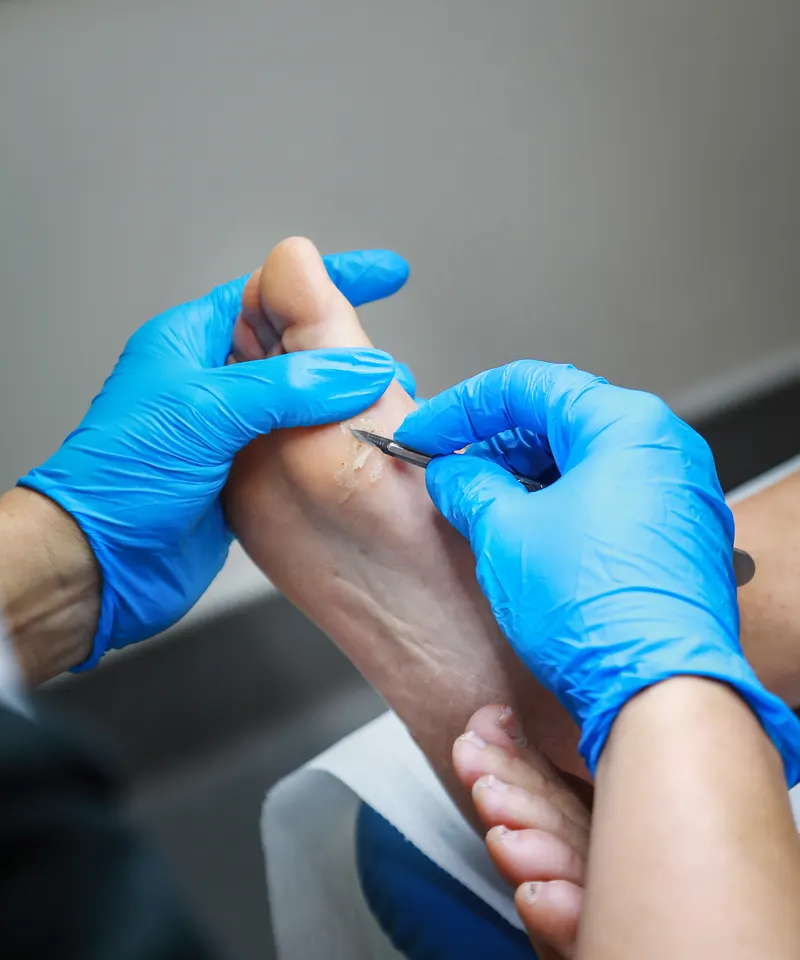
General podiatry care pictured, not orthotic production or fitting.
When might orthotics be considered?
Suitability depends on your symptoms, assessment findings and goals. These examples are possibilities, not promises of a particular result.
Heel & arch discomfort
In some presentations, an orthotic may help support the foot or redistribute pressure around the heel and arch.
Symptomatic flat feet
For some people whose foot posture is linked with symptoms, additional support may help comfort or function.
Bunions & forefoot pressure
An appropriately considered insole may help manage pressure around sensitive areas of the forefoot.
Running & sport
For selected running-related symptoms, orthotics may be one part of a wider plan alongside footwear and activity considerations.
Uneven pressure or callus
Some insoles can be designed to offload particular areas when local pressure contributes to discomfort.
Changes after injury or surgery
In certain circumstances, an orthotic may help accommodate changes in foot structure or function.
Orthotics are not necessary or appropriate for everyone.
Standard insoles and custom-made orthotics
They serve different needs. Custom-made does not automatically mean better.
Standard insoles
- Available in standard shapes and sizes
- Often provide general cushioning or support
- May suit straightforward requirements
- Can be an appropriate first option
Custom-made orthotics
- Prescribed for an individual following assessment
- Considered around specific clinical and functional needs
- May include targeted support or pressure management
- May be considered when standard insoles are unsuitable
The right choice depends on the problem being addressed. An assessment can help establish whether an off-the-shelf insole, a custom option or another approach is more suitable.
It starts with understanding your feet
For foot or lower-limb pain, a biomechanics assessment may be a useful starting point: it helps explore symptoms and function before considering whether orthotics could be appropriate. Not every insole question needs a full biomechanics assessment, so contact the team if you are unsure which kind of appointment to ask about. They can explain the available options before you decide how to proceed.
Explore biomechanics assessmentsIf a custom option is recommended after assessment, discuss its intended purpose, alternatives and costs before deciding. Ask reception to confirm current supply options and how any measurements, fitting, review or adjustments would be arranged and charged. These arrangements depend on the option available; this page is not an order form.
Good orthotics work with suitable shoes
Even a well-designed orthotic needs suitable footwear. Your everyday shoes, work shoes and trainers all matter; available space inside a shoe can affect fit. Your podiatrist can discuss what to look for and whether the footwear you already use is suitable for an option being considered.
When to seek urgent advice
A foot ulcer or open wound, suspected fracture, sudden severe pain or rapidly worsening symptoms should not wait for a routine orthotics enquiry. Seek urgent advice from NHS 111 or your GP; call 999 for a life-threatening emergency.
Find out more about Podiatry & Foot Health or the b2 team.
Frequently Asked Questions
Common questions about custom-made orthotics
Related Services
Comfort starts with understanding what support is right for you
Not sure whether standard insoles, custom-made orthotics or another approach is suitable? Contact the team to discuss the options and how to begin with an assessment.